Wednesday, December 24, 2008

my mother's angels began the week


mun Äidin enkelit. my mother's angels

mun Äidin enkeli. my mother's angel


a tonttu from a vanha Joulu liina. An elf on an old Christmas linen from Finland. My mother decorates her home each Christmas with her Christmas linens and angels.


Part of the food spread at my mom's 75 birthday drop in party, which included suolakala voileipä or salted salmon sandwiches, karjalanpiirakka, piiparit, almond cake, cheesecake, fruit cake, quinoa salad, and many other delicious edibles. Lots of coffee was served. There were many guests.


After many days of delicious edibles, morning walks are a must. I left for my morning walk today rather late, 10 am. Anna and Eero, visiting from Finland, came over last night for supper with their new son, Aleksi. Again, more delicious edibles. This morning I decided to sleep in. A gal is entitled to that every now and then. When I left for my walk it was -21c.

A dusting of snow fell last night. It is not a cliche to say the day was magical.


The air was crisp and clear, the sun was brilliant, the snow was glistening, and the sky was crackling blue. I saw starlings eating mountain ash berries, pine siskins eating birch catkins, and redpolls burrowing in the snow.


I took the shortcut on the path through the woods which used to be an old toboggan run.


The scrub bush up close; it's a tangle.


The path along the creek was plowed nicely, but even so, after 5 k of trudging through the snow, one feels a bit breathless. My cheeks were frozen by the time I got back home.
The winter lights at my home.

Monday, December 22, 2008

Oh. Little Town of Bethlehem


O Little Town of Bethlehem cards

About the hymn O Little Town of Bethlehem, the Rev Stephen Coulter, Rector of Pimperne in Blandford Forum, Dorset said

he can no longer bring himself to sing the lyrics of the hymn as he believes they are too far removed from the reality of one of Christianity's holiest sites.
....
He said: 'At the service I took the opportunity to bring the congregation’s attention to what life is actually like there today. I can’t bring myself to physically sing the words, especially the opening line "how still we see thee lie".'"

He's not the only minister with a conscience, as 2 years ago, parish priest Father Paul Maddison

"A priest from the Diocese of East Anglia, England, has decided to replace a live Nativity scene for a replica of the wall encircling Bethlehem in protest of the Israeli separation barrier."

from People's Geography~Reclaiming Space

"The view of Bethlehem is now obscured by the massive Apartheid Wall which Israel has built in and around the city."

Bethlehem today is very different than the romantised Bethlehem we imagine. Below is a letter I wrote that was published in our local newspaper 3 years ago, that explains my history with the hymn,

Oh, Little Town of Bethlehem

was a song I loved singing as a girl. When December came around, my sisters and
I couldn’t wait for the Christmas carol section of the Port Arthur News Chronicle. The song we all looked for was “Oh, Little Town of Bethlehem.”

We sang it every Christmas Eve, standing in front of the TV.

The first stanza especially resonated in my young mind. The lyrics spoke of a
redeeming hope lying deep in the dark – a dark of which I in my naivete knew nothing about, yet somehow sensed was part of my future.

O little town of Bethlehem
How still we see thee lie!
Above thy deep and dreamless sleep
The silent stars go by;
Yet in thy dark streets shineth
The everlasting Light;
The hopes and fears of all the years
Are met in thee tonight.

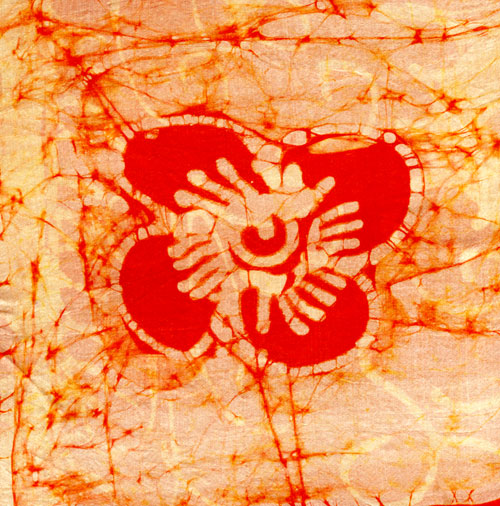
For Grade 7 art class, dreams of ‘the little town of Bethlehem’ still echoing, I
made an indigo-blue batik of Bethlehem, Mary and Joseph traveling outside its gates, and a silver star in the night sky. Thirty-six years later, my mom still
hauls it out at Christmastime to pin up on her living room wall.

But never once, during all those years of singing Christmas carols, doing Christmas art at school, or learning about Christmas in church, newspapers, or TV did I hear about the inhabitants of Bethlehem and its surrounding region --
the Palestinians.

Many Palestinians are Christian, the original Christians, going back to Jesus
Christ and the Apostles, but the word Palestinian was not part of the Bethlehem I had been taught to envision.

The little town of Bethlehem I learned about was idyllic, a dreamy vision of hope, a sanctuary in the desert, a place where Jesus, the savior, was born. A metaphor for the redemption of humankind.

Over the years, I have come to question the ‘kind’ part of the phrase.


What would Jesus say about Apartheid?

Recently, I found out about Dheisheh, located near Bethlehem. Home to 11,000 people who live on less than half a square kilometer of land. Dheisheh, a refugee camp, is home to the residents (and descendents) of 45 villages who were expelled after the state of Israel was created in 1948.

Since 2003, Dheisheh has lost 21 residents to Israeli attacks, 5 of them
children under the age of 17. In addition to invasions by tanks, attacks by Apache helicopters, raids by Israeli soldiers, curfews, barbwire, closures of schools, 70% unemployment rate, severe shortage of water and electricity, the residents now have to deal with the 15 k long, 25’ tall Israeli-built “security” wall that encircles Bethlehem and region.

I wonder, if Mary and Joseph and the 3 wise men had to travel to Bethlehem today, would the soldiers manning the apartheid wall let them through? Would they have had the necessary travel documents from the Israeli government arranged months in advance? Or would they, like their descendants the Palestinians, have resigned themselves that it would be impossible to pass through to Bethlehem because of the Wall? That the degradation wasn’t worth it?

I wonder, what sort of batik would I have made if I had known this human unkindness?

Thursday, December 18, 2008

a Ghada kind of woman


Ghada Mohamed and me

This is the 2nd Ghada that I know; she is Egyptian Canadian, and had come to Thunder Bay to teach Economics at Lakehead University, but she has since left. The 1st Ghada that I met was also Egyptian, and like the 2nd Ghada, her forte was holding huge dinner parties for women, the more food and the more women, the merrier. These women had a natural talent for organizing and getting people together. I miss those women-only fantastic parties; there was much laughter, dancing, talking, and eating. This photo was taken Feb 15, 2003. Ghada no. 2 and I attended and spoke out at the march and rally here in town when there was a worldwide call to protest against the upcoming US invasion of Iraq. It was freezing that day; about -25c, terrible windchill, yet there was a big turnout of local people--even moms with babes in arms--who walked against the winter winds to add their bodies to the mass that believed then and believe now that invading and occupying Iraq was and is wrong.


Ghada Hussein Al-Almy from Iraq. Rand Corp. photo

This is another Ghada. I don't know this Ghada, but it seems to me that the name, Ghada, is a very strong name. The Ghadas I have known have been intelligent, strong, determined, efficient, friendly, open, warm, and no-nonsense women. The Ghadas I have known did not let an inhospitable climate or adverse unfamiliar surroundings dampen their determination to get things done--in fact, they were the first ones to say, hmmm, what can I do here?

This 3rd Ghada seems like a Ghada kind of woman. Much of the news from Iraq, whether tv, newspapers, blogs, or personal reports, pounds us on the head with the death, destruction, tragedies, ongoing horrors, injustices and irreconcilable problems. This, of course, is crucial to know, to keep in mind, to try in our own way to speak out against, to do something about. Turning a blind eye, moving away with a click of the mouse, or excusing oneself by saying "it's too complicated to understand" or "it's not my problem" or "what's the use?", makes one part of the problem, not the solution. Taking the stance to not be informed of the terrible happenings done in our name is a place of privilege.

Yet, as someone who takes her politics to heart, it can be difficult to maintain a sense of hope. Especially, in these times of the normalization of war, oppression and occupation. Like the US in Iraq and Afghanistan, Canada in Afghanistan also is normalized in our media and in our cities, and speaking out against our country's military presence there gets one painted as not "supporting our troops". And too many folks would "just rather not talk about it"; 'it' being those things that are contentious, that can cause disagreements between and among neighbours, families, friends and colleagues.

So, hope is sometimes an illusive thing.

But today, an unexpected feather of hope blew in. Today, one of my friends forwarded to me a recent article on the tradition of Iraqi women's resistance, and I have to say, I felt elated after reading it! These Iraqi women are inspiring! They refuse to be beaten down by despair and are out there making a difference. I love their idea of taking culture as a weapon! They, too, are taking back their streets:

"Almy is a Baghdad University professor-turned-"theater resistance leader," as her fans call her. In the wake of some of Iraq's worst suicide bombings, she and her troupe decided to use culture as a defensive weapon, producing and staging plays that mobilize the audience against violence and killing.
....
The open-air dramas typically run for two weeks at locations around Baghdad where bombs have been exploded by extremists. Almy's statement to the extremists is simple: "You will not take away our way of life, or our culture."

'We are trying to use culture as a weapon," Ghada told us. "We want to make the terrorists feel the strength of our culture.'"

Wednesday, December 17, 2008

If you want to become whole


the stained glass window of a Catholic Church I passed late one cold evening while walking downtown Port Arthur. Something was going on inside so the light glowed out in the dark.

If you want to become whole,
let yourself be partial.
If you want to become straight,
let yourself be crooked.
If you want to become full,
let yourself be empty.
If you want to be reborn,
let yourself die.
If you want to be given everything,
give everything up.

- Tao Te Ching